What to remember
- Riders cross the LINQ Promenade on FLY LINQ either sitting upright in the harness or face-down and flat, the position most people call superhero.
- Whether you get sitting or superhero is not spelled out on the ticket, so ask about it when you book if the answer would change your plans.
- Lying flat puts your face into the airflow and removes the ground from your side vision, which is why it feels quicker than sitting even on the same stretch of line.
- The ticket buys a fast-track pass straight past the general queue for the line; that fast-track pass is the entire inclusion.
Two Ways Down the Line
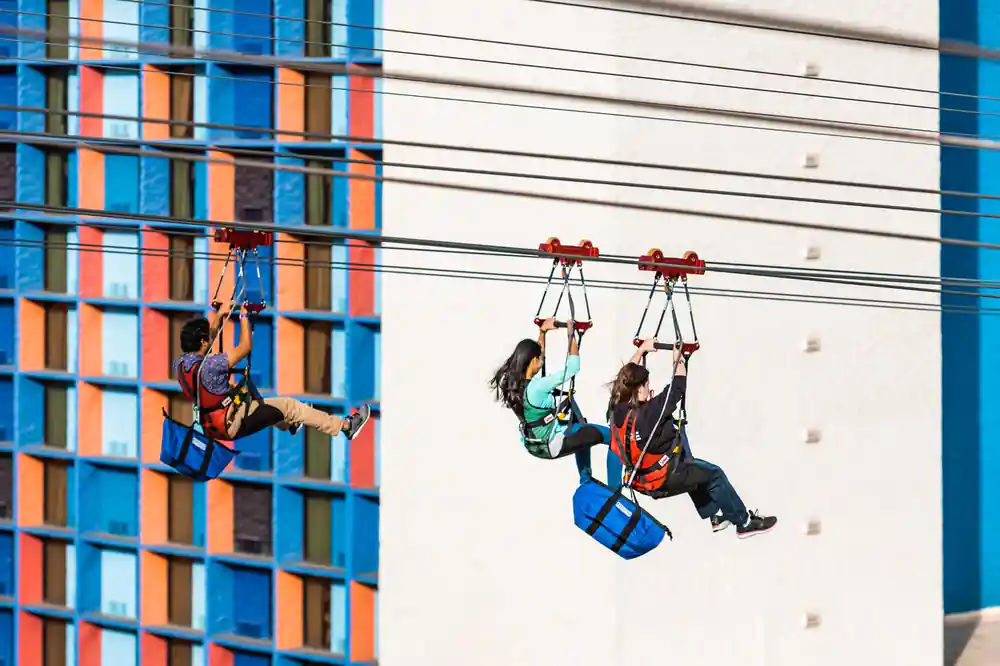
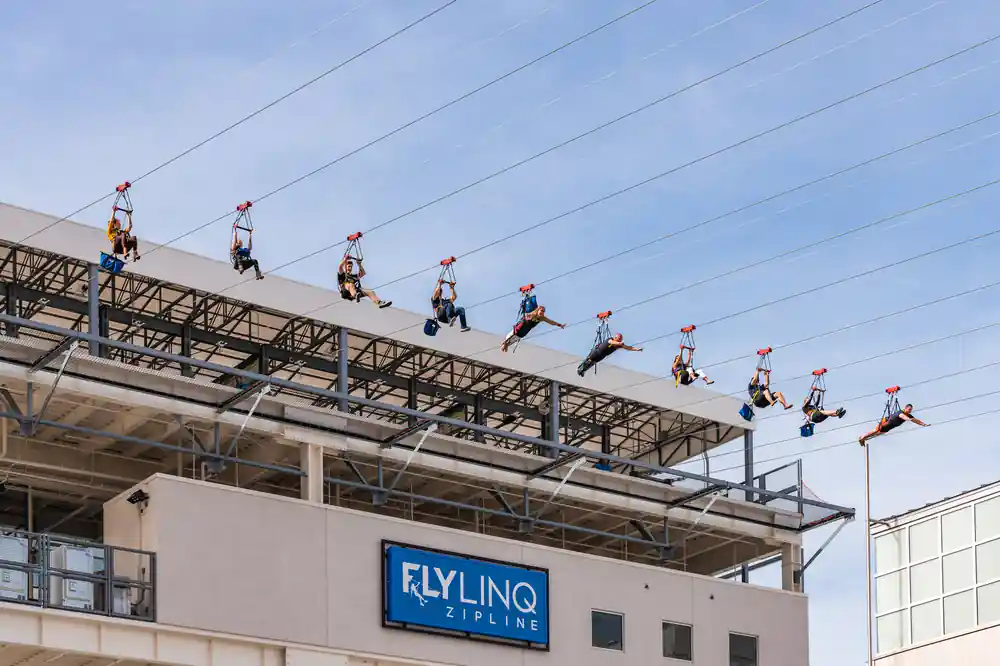
FLY LINQ runs riders across the LINQ Promenade in one of two positions. The first is seated, upright in the harness the way most ziplines run: legs forward, the line taking your weight from a point above your shoulders. The second is face-down and flat, arms out ahead of you, which is the position most people mean when they say superhero. Both are used on this line, and the gallery of past riders shows both in regular use.
The two are not a cosmetic choice. They change what is in front of your face for the length of the crossing, how much of the promenade stays in view, and how the ride feels from the inside, which is a different question from how fast the line actually runs. FLY LINQ is a single crossing above a shopping promenade in the middle of the Strip, not a mountainside line strung between peaks, and the ride sits at that scale: short and urban rather than an expedition. What position does to that short crossing is the whole subject of this page.
Sitting Upright
Seated, the harness sits you the way a chairlift does: body vertical, legs hanging or forward, the cable and the frame above you rather than behind. The ground stays in your peripheral vision the whole way across, and so does the promenade below it, the shopfronts, the bars, and the High Roller wheel further along it. Nothing about the ride hides the reference points a nervous flyer reaches for without thinking.
It is the position closer to what most people picture when they hear the word zipline, and it reads as the calmer of the two before you have tried either. You can turn your head, track the promenade passing underneath, and orient yourself against the Strip the whole way. None of that changes the line itself. It changes how much information your eyes are getting while it happens.
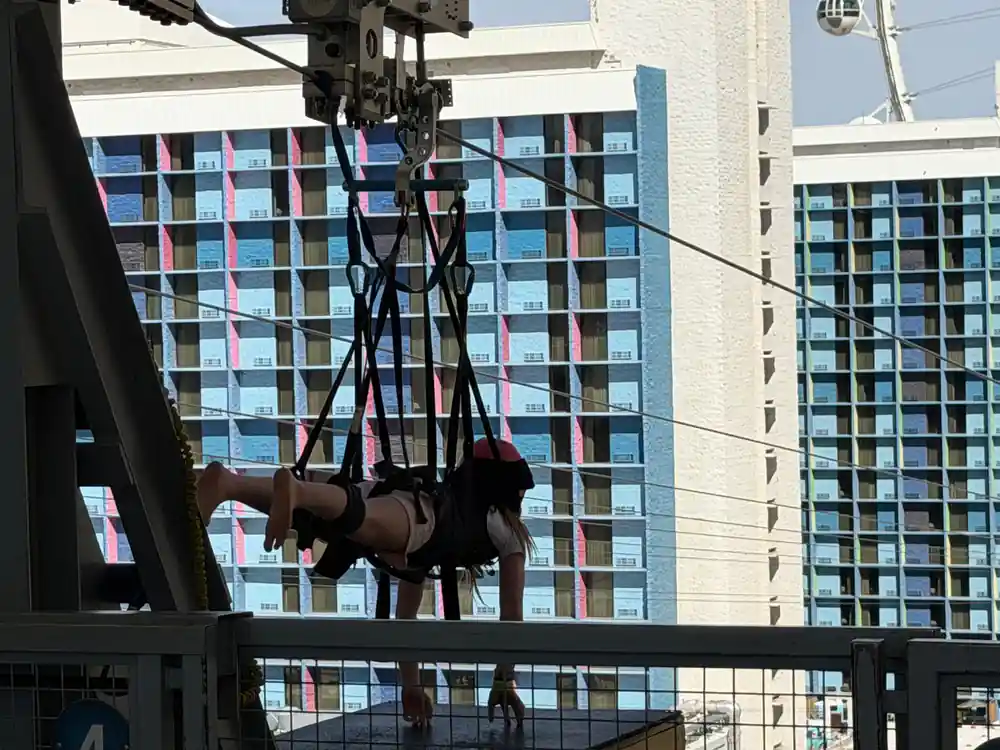
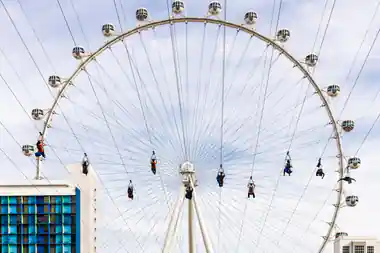
Two ways across the LINQ Promenade: upright in the harness, or flat and face-first.
Face-Down and Flat
Superhero puts you flat, chest down, arms forward, so the promenade is directly beneath you rather than to the side. The air comes straight at your face instead of past your shoulders, and the ground stops being something you glance at and becomes something you are looking straight down into. Riders who have done both describe it as the more physical of the two, simply because there is more air on more of the body.
The reason it feels faster sitting alongside a line that has not changed speed is the reference points. Upright, your eyes have the frame of the harness, the cable above, and the promenade at a fixed angle to check yourself against. Flat, most of that disappears, and a sense of speed built on missing reference points reads as quicker even when the cable is doing exactly what it did for the rider before you.
Which One Suits A Nervous First-Timer
If this is a first zipline and nerves are part of the question, sitting upright is the easier place to start. Keeping the ground and the promenade in view gives an anxious rider something to orient against, and the position itself asks less of the body: no bracing, no holding a flat line with your arms, just sitting in a harness that is doing the work for you.
Superhero rewards someone who already knows they like the sensation and wants more of it, since removing the reference points is the entire appeal rather than a drawback to manage. It is not a harder version of the same crossing; it is simply built for someone chasing the feeling of falling forward rather than the reassurance of still being able to see the ground properly.
What Actually Shapes The Ride
Two questions come up more than any others: how fast is it, and how long does it last. Both turn on position more than on the line itself. Sitting upright gives your eyes a fixed frame, the harness, the cable, the promenade at a steady angle, so the crossing reads at something close to its real pace. Face down, most of that scaffolding disappears, and losing it is what makes the exact same stretch of line feel like it is moving quicker underneath you. The same goes for how long it lasts: a crossing with nothing fixed to check against passes differently in memory than one where you tracked the promenade the whole way over, even on the same stretch of cable.
The fast-track part of the ticket affects the other half of the wait, which is the queue rather than the ride itself. Buying past the general line changes how much of your visit is spent standing at the base rather than moving on the cable, and that shift in waiting time shapes the whole outing far more than either position does.
Booking It And What Comes With It
The ticket itself covers one thing: fast-track access past the general queue for FLY LINQ above the LINQ Promenade. A souvenir photo and video of your ride are not part of it, and are sold separately on site if you want to keep the moment rather than trust your own memory of which position felt faster.
Which position you get is not spelled out on the ticket, so if the answer would change your decision to book, ask about it when you buy or again at check-in, the same way you would confirm any detail that matters before you commit to a day out. Instructions before you ride are given in English, which is the one part of the day that stays the same regardless of which position you end up in.
Check dates for the FLY LINQ zipline
from US$43